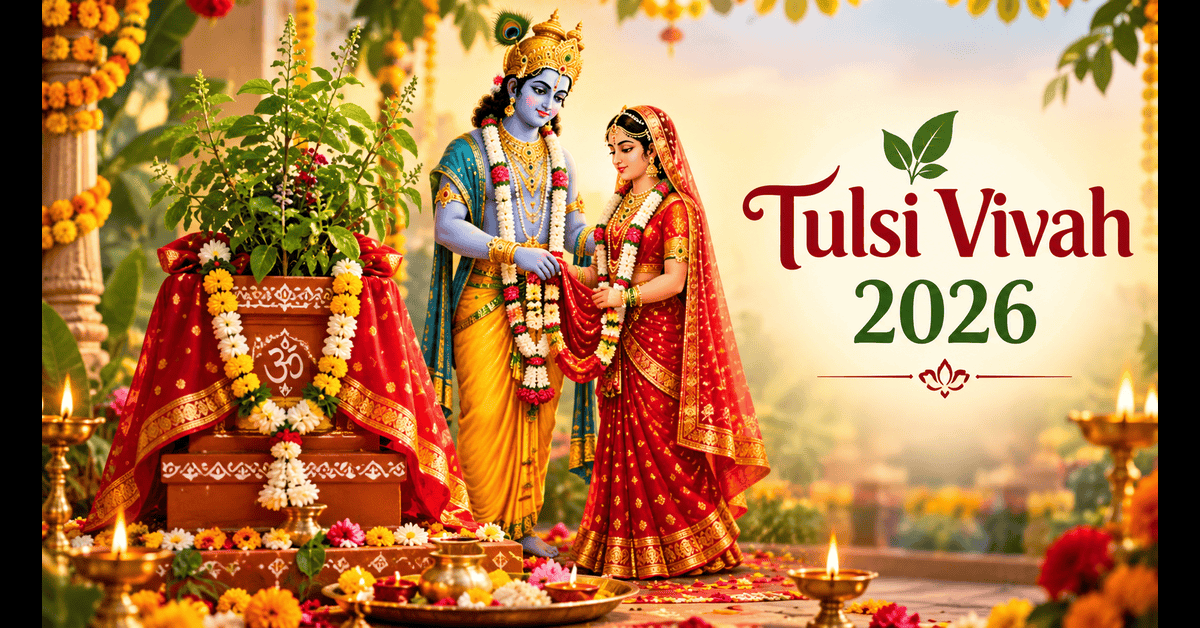
Tulsi Vivah is a cherished Hindu festival that celebrates the divine marriage of Goddess Tulsi with Lord Vishnu. Observed during the holy month of Kartik, this occasion brings together devotion, family traditions and the spiritual symbolism of marriage. Homes are decorated with flowers, rangoli and glowing diyas, while the sacred Tulsi plant is adorned like a bride for the ceremonial wedding.
For many Hindu families, Tulsi Vivah is also associated with the beginning of the traditional Hindu wedding season. The festival offers an opportunity to seek divine blessings, express gratitude and renew one’s connection with religious customs.
In 2026, devotees can prepare for this auspicious celebration by understanding its date, traditional puja procedure, religious significance and the story behind the sacred union.
Let’s Explore the Complete Essence of Tulsi Vivah 2026:-
Tulsi Vivah 2026: Date and Tithi
Tulsi Vivah will be celebrated on Saturday, November 21, 2026, according to widely followed Hindu calendar calculations. The festival is observed during Shukla Paksha Dwadashi in the month of Kartik in many traditions. Some families perform the ceremony on the evening of Dev Uthani Ekadashi, depending on their regional customs.
The Dwadashi tithi is expected to begin at approximately 6:31 AM on November 21 and end at approximately 4:56 AM on November 22, according to the Hyderabad-based Drik Panchang listing. Exact timings may differ slightly according to location and panchang calculations.
Devotees should consult their local panchang or family priest before finalising the ceremony’s muhurat.
Tulsi Vivah 2026 Muhurat: When Should the Puja Be Performed?
Tulsi Vivah is traditionally performed during the evening, particularly around Godhuli Kaal, the twilight period associated with the return of cattle at sunset. This period is considered particularly auspicious for various Hindu wedding rituals and traditions.
For New Delhi, one published calculation places the evening muhurat on November 21, 2026, between approximately 5:25 PM and 8:06 PM. This is a location-specific reference, not a universal timing for every city.
The most suitable time may vary according to the local sunset, the prevailing tithi and the method of calculation followed by the family. Therefore, devotees should verify the exact muhurat for their city rather than relying on a single nationwide time.
Why Is Tulsi Vivah Celebrated?
Tulsi Vivah commemorates the sacred union of Tulsi Devi with Lord Vishnu, who is represented during the ceremony by a Shaligram stone or an image of Lord Vishnu or Shri Krishna.
In Hindu tradition, Tulsi is deeply respected for her purity, devotion and spiritual importance. The plant is commonly grown in courtyards, balconies and designated prayer spaces, where families offer water, light lamps and perform daily worship.
The festival is significant for several reasons:
- A tribute to faith and devotion: Tulsi Vivah celebrates Tulsi Devi’s deep-rooted devotion and her divine bond with Lord Vishnu.
- A symbol of marital harmony: The ceremonial wedding represents commitment, mutual respect and the blessings associated with married life.
- A seasonal religious milestone: Tulsi Vivah follows the observances associated with Dev Uthani Ekadashi and the end of Chaturmas in many traditions.
- A family celebration: The rituals bring family members together through prayer, traditional decorations, devotional songs and the sharing of prasad.
Although customs differ between regions, the central theme remains the celebration of divine devotion and auspicious beginnings.
The Divine Tale of Goddess Tulsi and Lord Vishnu
The traditional story of Tulsi Vivah is connected with Vrinda, a devoted woman whose life is associated with the sacred Tulsi plant.
According to a widely narrated version of the legend, Vrinda was married to Jalandhar, a powerful king whose strength was linked to her steadfast devotion. As long as Vrinda’s spiritual vow remained unbroken, Jalandhar was believed to be extraordinarily difficult to defeat.
To bring an end to his growing power, Lord Vishnu intervened through a divine plan. When Vrinda discovered what had happened, she was overcome with grief and cursed Lord Vishnu to become stone. The curse is associated in tradition with the origin of the sacred Shaligram form of Vishnu.
Vrinda eventually left her mortal form, and the Tulsi plant is believed to have emerged from her remains in the commonly told version of the story. Recognising her devotion, Lord Vishnu granted Tulsi a special place in his worship and accepted her as his divine consort.
Tulsi Vivah commemorates this sacred bond. The annual ceremony is a reminder of devotion, divine grace and the enduring relationship between Tulsi Devi and Lord Vishnu.
Different scriptures and regional traditions narrate aspects of this story differently, but the reverence for Tulsi remains central to the festival.
Tulsi Vivah 2026 Puja Vidhi: Step-by-Step Rituals
Families may follow different customs for Tulsi Vivah, but a simple home ceremony can be organised with traditional worship items and sincere devotion.
-
Clean the Puja Area
Begin by cleaning the space around the Tulsi plant. Decorate the area with rangoli, flowers and a small arrangement of lamps. If the family follows a customary fast, observe it according to personal practice and guidance.
- Decorate the Tulsi Plant
Adorn the Tulsi plant as a bride using a red or yellow cloth, flowers, a decorative chunri and other suitable ornaments. Ensure that decorations are arranged gently without damaging the plant.
-
Prepare the Wedding Mandap
Create a small ceremonial mandap around the Tulsi plant. Some families use sugarcane stalks or other traditional decorative materials. Place a Shaligram stone, an image of Lord Vishnu or a Krishna idol nearby to represent the groom.
-
Arrange the Puja Samagri
Keep the required items ready before beginning the ceremony. Commonly used materials include flowers, turmeric, kumkum, sandalwood paste, rice grains, incense, a diya, fruits, sweets, water and Tulsi leaves where appropriate.
-
Worship Goddess Tulsi and Lord Vishnu
Begin with prayers to Lord Ganesha, followed by worship of Tulsi Devi and Lord Vishnu. Offer flowers, apply traditional tilak where appropriate, light incense and recite prayers or mantras according to your custom.
-
Perform the Symbolic Wedding
Conduct the marriage ceremony following the family’s established rituals. Some households perform a kanyadaan-style offering, recite wedding verses, exchange symbolic garlands or use a sacred thread as part of the ceremony.
A priest can guide families who wish to perform the complete traditional vidhi.
-
Perform Aarti and Distribute Prasad
Conclude the puja with aarti to Tulsi Devi and Lord Vishnu. Offer fruits and sweets, seek blessings for the household and distribute prasad among family members and guests.
The ceremony can be simple or elaborate. Sincerity, respect for the tradition and a peaceful atmosphere are more important than expensive decorations.
Tulsi Vivah Puja Samagri 2026
Prepare the following items in advance, adapting the list to your family’s customs.
- Tulsi plant in its pot or sacred Tulsi Vrindavan
- Shaligram stone or an image of Lord Vishnu or Shri Krishna
- Red or yellow cloth and a decorative chunri
- Fresh flowers and garlands
- Kumkum, turmeric, sandalwood paste and rice grains
- Diya, cotton wicks, ghee or oil
- Incense sticks and a small lamp for aarti
- Water, fruits and traditional sweets
- Rangoli materials and decorative items for the mandap
- Sacred thread and other wedding-ritual items, if required by your tradition
There is no need to purchase every item if your family follows a simpler form of worship.
What Is the Importance of Tulsi in Hindu Worship?
Tulsi occupies a special place in many Hindu households, especially among devotees of Lord Vishnu and Lord Krishna. Its leaves are traditionally offered during worship, and the plant is cared for as a sacred presence within the home.
Tulsi is associated with purity, devotion and auspiciousness. Daily practices such as watering the plant, offering prayers and lighting a lamp nearby form part of many families’ spiritual routines.
The significance of Tulsi Vivah extends beyond the wedding ritual itself. It celebrates the plant’s revered status and encourages people to preserve traditions that connect religious life with everyday household practices.
The festival also reminds devotees to approach worship with gratitude, humility and respect for nature.
What Should Devotees Keep in Mind on Tulsi Vivah?
If you are observing Tulsi Vivah at home in 2026, a few practical considerations can help you prepare.
- Check the local panchang for the date and auspicious timing.
- Follow the customs practised by your family or regional community.
- Keep the puja space clean and arrange the materials before the ceremony.
- Handle the Tulsi plant carefully while decorating it.
- Avoid treating optional regional customs as compulsory rules for every household.
- If you have questions about fasting or specific ritual restrictions, seek guidance from a trusted family priest.
Conclusion
Tulsi Vivah 2026 celebrates the sacred union of Tulsi Devi and Lord Vishnu, symbolising devotion, prosperity and auspicious beginnings. Celebrate this special occasion with traditional puja, prayers and decorations, while following your family customs. Remember to check the local muhurat and prepare the puja samagri in advance. May Tulsi Vivah bring peace, happiness and divine blessings to your home.
To know more about various astrology-related services, contact Vedic Astro Kendra.
Mobile No.: +91-9810817817, 9319675902
WhatsApp: +91-9810817817
We deliver top-tier products and exceptional customer service to our valued clients. Our offerings includes Online Puja, Yantras and Kavach, Kundali Vishleshan (the creation and interpretation of birth charts), Vastu Shastra Consultations, as well as personalized recommendations for Gemstones and Rudraksha.