Sharad Navratri is one of the most revered Hindu festivals dedicated to Maa Durga and her nine divine forms. Celebrated over nine days, the festival brings together devotion, fasting, prayer, meditation and traditional rituals. For devotees, Navratri is an opportunity to seek the blessings of the Goddess while focusing on inner strength, discipline and spiritual growth.
In 2026, Shardiya Navratri will begin on Sunday, October 11, and the nine-day observance will conclude on October 19.
Let’s Explore the Complete Essence of Sharad Navratri 2026:-
🔱When Does Sharad Navratri 2026 Begin?
Shardiya Navratri begins on Pratipada Tithi of the Shukla Paksha in the month of Ashwin according to the Hindu calendar.
The first day, October 11, marks the beginning of the Navratri celebrations with Ghatasthapana, the ceremonial establishment of the sacred Kalash. Devotees then worship one form of Maa Durga on each of the nine days.
The festival culminates with the observance of Vijayadashami on the tenth day.
🪔Sharad Navratri 2026: Complete Date-Wise Puja Schedule
| Day | Date | Main Worship |
| Day 1 | October 11 | 🌸Ghatasthapana and Maa Shailputri Puja |
| Day 2 | October 12 | 🪔Maa Brahmacharini Puja |
| Day 3 | October 13 | 🔔Maa Chandraghanta Puja |
| Day 4 | October 14 | 🌺Maa Kushmanda Puja |
| Day 5 | October 15 | 🦁Maa Skandamata Puja |
| Day 6 | October 16 | ⚔️Maa Katyayani Puja |
| Day 7 | October 17 | 🌑Maa Kalaratri Puja |
| Day 8 | October 18 | 🛕Navratri Ashtami observances |
| Day 9 | October 19 | 🕉️Maa Mahagauri Puja and Mahanavami rituals |
| Day 10 | October 20 | 🏹Vijayadashami and Durga Visarjan |
According to the 2026 Panchang information provided, October 19 includes rituals associated with Ashtami and Mahanavami, while Vijayadashami will be observed on October 20. Specific observances can vary according to regional traditions and local Panchang calculations.
🕛Ghatasthapana Muhurat for Navratri 2026
Ghatasthapana is among the most important rituals performed at the beginning of Navratri. It symbolically marks the start of the Goddess’s worship for the nine-day festival.
For New Delhi, the available Panchang calculation gives the following timings for October 11, 2026:
- Ghatasthapana Muhurat: 6:31 AM to 10:33 AM
- Abhijit Muhurat: 12:10 PM to 12:58 PM
These timings are location-specific. Since Hindu Muhurat calculations can vary with sunrise and geographical location, devotees should check the Panchang applicable to their own city before performing Ghatasthapana.
🌺How to Perform Navratri Puja at Home
A simple traditional worship routine can begin with cleaning the Puja area and preparing a clean chowki. Cover the chowki with a fresh cloth and place the image or idol of Maa Durga.
For Ghatasthapana, place clean soil in a suitable vessel and sow barley seeds. Fill the Kalash with clean water and add customary items such as Akshat, Supari and a coin. Place mango leaves around the opening and keep a coconut on top as traditionally prescribed.
Once the Kalash has been established, devotees can light a Diya and incense and begin worship with prayers to Maa Durga. Flowers, Roli, Akshat, fruits and Naivedya may be offered according to family tradition.
The daily worship can include:
- Meditation on the form of the Goddess associated with that day
- Recitation of Durga mantras
- Durga Chalisa or Durga Saptashati reading
- Offering flowers and Naivedya
- Lighting a Diya
- Performing Aarti
The depth of the ritual may vary depending on individual faith, family customs and regional traditions.
✨Why Do Devotees Observe a Fast During Navratri?
Fasting is an important part of Navratri for many Hindu devotees. However, there is no single way in which everyone observes the fast. Some people fast throughout all nine days, while others observe a fast on selected days.
The traditional emphasis is not simply on avoiding food. Fasting is also associated with self-discipline, restraint and creating time for prayer and spiritual practice.
Those observing a fast commonly choose foods permitted by their particular tradition and focus on a simple, sattvic lifestyle. People should consider their individual health and nutritional needs when deciding whether and how to fast.
✨The Spiritual Meaning of the Nine Forms of Maa Durga
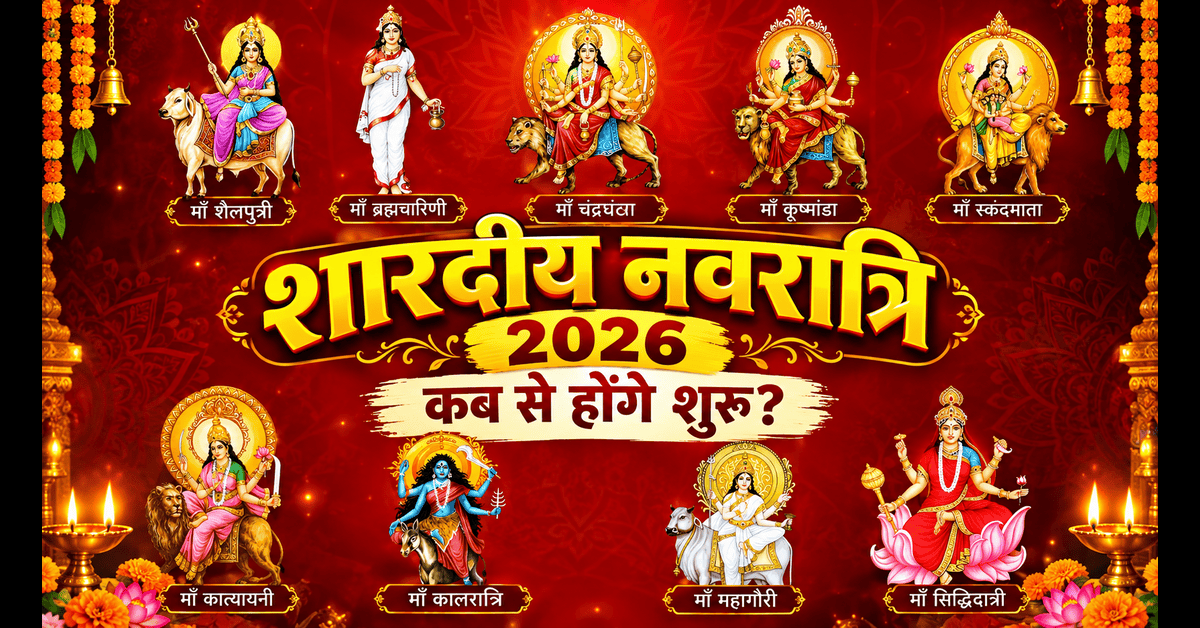
Each day of Navratri is traditionally associated with a different form of Maa Durga. Together, these nine forms are known as the Navadurga.
The nine forms are:
- Maa Shailputri – Worshipped on the first day.
- Maa Brahmacharini – Associated with devotion, discipline and spiritual determination.
- Maa Chandraghanta – Worshipped on the third day.
- Maa Kushmanda – Revered on the fourth day.
- Maa Skandamata – Worshipped on the fifth day.
- Maa Katyayani – Associated with the sixth day of Navratri.
- Maa Kalaratri – Worshipped on the seventh day.
- Maa Mahagauri – Associated with the eighth day.
- Maa Siddhidatri – Traditionally associated with the ninth day.
Different regional calendars and traditions may describe the sequence or day’s observances somewhat differently, so devotees may follow their local Panchang.
✨Religious Significance of Sharad Navratri
Shardiya Navratri is traditionally regarded as a festival celebrating Shakti, or divine feminine power. Worship of Maa Durga and her different manifestations represents devotion to qualities such as courage, wisdom, compassion, determination and strength.
The festival is also associated in Hindu tradition with the triumph of good over evil. Beyond the external symbolism, Navratri can be viewed as a period of introspection—an opportunity to work on self-control, reduce negativity and dedicate more time to prayer and service.
For many devotees, the nine days are therefore not only a religious celebration but also a period of personal discipline and spiritual reflection.
✨What Can You Do During Navratri?
Devotees can observe Navratri according to their own traditions and circumstances. Common practices include:
- Keeping the home and Puja area clean.
- Offering daily prayers to Maa Durga.
- Lighting a Diya during worship.
- Chanting Durga mantras.
- Reading Durga Chalisa or Durga Saptashati.
- Observing a fast according to one’s health and tradition.
- Donating food or essential items to people in need.
- Participating in Kanya Puja on Ashtami or Navami where it is part of the family tradition.
- Spending time in meditation and spiritual reflection.
- Maintaining a peaceful and disciplined routine.
🌺Things to Keep in Mind During Navratri 2026
Navratri is traditionally associated with cleanliness, devotion and sattvic living. Devotees may choose to avoid unnecessary arguments, anger and activities that conflict with their religious observances.
Those keeping a fast should not ignore their health. Fasting practices differ considerably, and people with specific dietary or health requirements should choose an appropriate approach rather than following a demanding fast simply because others are doing so.
Most importantly, Puja procedures and Muhurat can vary by region. Following the Panchang and customs traditionally observed in your family or community is a practical way to conduct the celebrations.
🪔Ghatasthapana and Navratri: A Meaningful Beginning
The first day of Navratri sets the tone for the entire festival. With Ghatasthapana, devotees symbolically establish the sacred presence of the Goddess and begin nine days of prayer and devotion.
From Maa Shailputri on the first day to the concluding Navadurga observances, each day provides an opportunity to focus on a different aspect of Shakti. Homes and temples become centres of prayer, while communities come together for traditional celebrations, devotional music and rituals.
Conclusion
Shardiya Navratri 2026 will be celebrated from October 11 to October 19, with Vijayadashami falling on October 20. The nine-day festival is a time for devotees to worship Maa Durga, observe fasting and embrace prayer, devotion and spiritual reflection. Devotees should check their local Panchang for accurate Ghatasthapana and other Muhurat timings.
To know more about various astrology-related services, contact Vedic Astro Kendra.
Mobile No.: +91-9810817817, 9319675902
WhatsApp: +91-9810817817
We deliver top-tier products and exceptional customer service to our valued clients. Our offerings includes Online Puja, Yantras and Kavach, Kundali Vishleshan (the creation and interpretation of birth charts), Vastu Shastra Consultations, as well as personalized recommendations for Gemstones and Rudraksha.