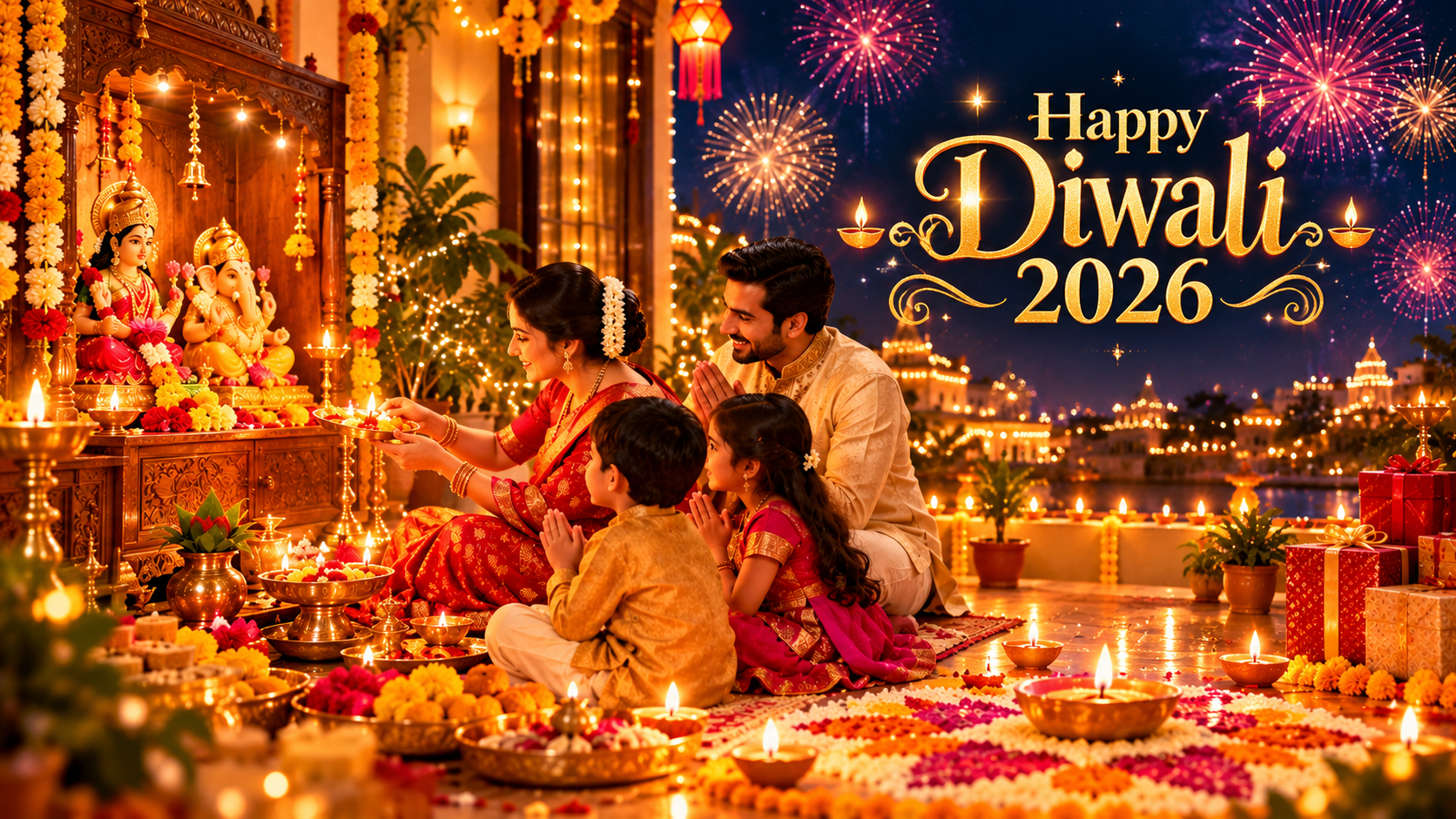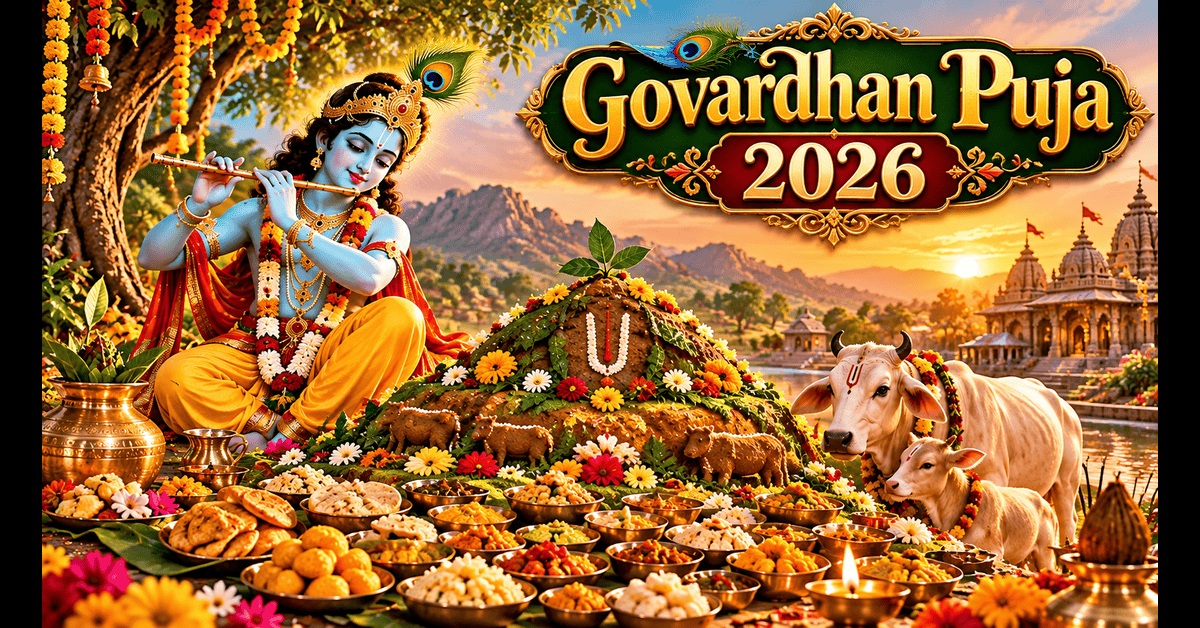
Govardhan Puja is one of the most meaningful festivals celebrated during the Diwali season, especially in the sacred Braj region of Uttar Pradesh. The festival is closely connected with Lord Krishna, Govardhan Hill and the timeless message of gratitude toward nature, cows and the divine.
In 2026, Govardhan Puja will be observed on Tuesday, November 10, the day after Diwali. The festival is traditionally associated with the Pratipada of the bright half of Kartik. Since religious timings can vary according to location and panchang calculations, devotees should confirm the local puja time before performing the rituals.
Let’s Explore the Complete Essence of Govardhan Puja 2026:-
What Is Govardhan Puja 2026?
Govardhan Puja is a Hindu festival dedicated to the worship of Govardhan Hill, revered by devotees as Giriraj Maharaj. It commemorates the famous episode in which Lord Krishna protected the people and cattle of Braj by lifting Govardhan Hill during a devastating storm.
The celebration is also known as Annakut, meaning a mountain or large collection of food. Devotees prepare numerous vegetarian dishes and arrange them as an offering to Lord Krishna and Govardhan. The tradition represents gratitude for nature’s abundance and the blessings that sustain everyday life.
Although the festival is celebrated in different parts of India, Govardhan Puja has a particularly deep connection with Mathura, Vrindavan and Govardhan, the heartland of Krishna’s childhood pastimes.
Govardhan Puja 2026 Date and Muhurat
For 2026, Govardhan Puja falls on:
Date: Tuesday, November 10, 2026
Festival: Govardhan Puja / Annakut
Day: The day after Diwali
The published local festival guide gives a morning puja window of 6:40 AM to 8:50 AM on November 10, 2026. The Pratipada tithi is listed as beginning at 12:31 PM on November 9 and ending at 2:00 PM on November 10. These timings should be checked against the panchang applicable to your location before planning the ceremony.
The Story Behind Govardhan Puja
The story of Govardhan Puja comes from one of the most beloved episodes associated with Lord Krishna.
According to the traditional account, the people of Braj regularly worshipped Indra, the deity associated with rain, hoping for favorable weather and good agricultural conditions. Krishna encouraged the residents to recognize the importance of Govardhan Hill, their cows, forests and the natural environment that supported their lives.
Following Krishna’s advice, the people offered their worship to Govardhan instead.
Indra became angry and sent heavy rain and powerful storms toward Braj. The rainfall threatened the people and animals of the region.
Krishna then lifted Govardhan Hill and held it above the ground, providing shelter for the residents and cattle of Braj. They remained protected beneath the hill until the storm ended.
This story forms the spiritual foundation of Govardhan Puja. Govardhan is therefore remembered not simply as a geographical location but as a sacred symbol of divine protection, humility and gratitude.
Why Is Govardhan Puja Celebrated?
The festival carries several important spiritual messages.
-
Gratitude Toward Nature
Govardhan Puja reminds people that human life depends on the natural world. Mountains, forests, water, soil, animals and agricultural resources all contribute to our survival.
The festival therefore provides an opportunity to express gratitude for these gifts.
-
The Importance of Humility
The story of Krishna and Indra is also understood as a lesson about pride. The episode teaches that power and status should not become sources of arrogance.
-
Respect for Cows
Cows have a special place in Krishna’s stories and in the traditions of Braj. Govardhan Puja is often accompanied by Go Puja, during which cows are decorated and worshipped with devotion.
-
Faith and Protection
Krishna’s act of sheltering the people of Braj represents the idea of seeking refuge in the divine during difficult circumstances.
What Is Annakut?
One of the central features of Govardhan Puja is Annakut.
Annakut means arranging a large amount of food in the shape of a mountain. On this occasion, devotees prepare a wide variety of vegetarian dishes, sweets, grains, vegetables and other offerings.
Many traditions associate this offering with Chhappan Bhog, which includes 56 varieties of food.
The devotees offer the beautifully arranged food to the deity before distributing it as prasad. The custom combines devotion, hospitality and thanksgiving.
How Do We Celebrate Govardhan Puja 2026?
Families, temples, and regions may follow different customs, but people widely observe several traditions during the festival.
Creating a Govardhan Representation
In many homes, devotees create a small representation of Govardhan Hill using cow dung. You can decorate it with flowers, leaves, lamps, and other traditional items.
Preparing Annakut
Families and temples prepare a variety of dishes for the Annakut offering. The devotees beautifully arrange the food before the deity and offer it with prayers.
After the offering, devotees receive the food as prasad.
Performing Go Puja
Govardhan Parikrama
Perhaps the most distinctive pilgrimage associated with the festival is the Govardhan Parikrama.
Devotees walk around the sacred Govardhan Hill as an act of devotion. The complete traditional circuit is approximately 21 kilometres, making it a significant spiritual walk for pilgrims visiting the region.
Govardhan Puja in Mathura and Vrindavan
If you want to experience Govardhan Puja in its traditional setting, the Braj region offers a unique atmosphere.
Govardhan itself becomes a major centre of pilgrimage, with devotees visiting the sacred hill and participating in the parikrama. Temples in Mathura and Vrindavan also celebrate Annakut with special decorations and food offerings.
The festival season can attract very large crowds, particularly around Govardhan Hill. Visitors planning a pilgrimage should therefore expect busy roads, crowded temple areas and significant pedestrian movement.
Arriving early can make temple visits and darshan more comfortable.
Important Places to Visit Around Govardhan
A Govardhan pilgrimage can include several sacred places associated with the wider Braj tradition.
Some commonly visited locations include:
- Govardhan Hill – the centre of the Govardhan pilgrimage.
- Daan Ghati – one of the important devotional sites associated with Govardhan.
- Mansi Ganga – a revered sacred water body in Govardhan.
- Radha Kund and Shyam Kund – important pilgrimage sites connected with Radha and Krishna traditions.
- Kusum Sarovar – a beautiful and historically significant stop near the Govardhan area.
- Haridev Temple – one of the prominent temples associated with Govardhan.
Together, these places allow visitors to experience different aspects of Braj’s spiritual heritage.
The Spiritual Meaning of Govardhan Puja
Beyond the rituals and celebrations, Govardhan Puja carries a simple but powerful message: be grateful for what sustains life.
The festival connects devotion with nature, community and service. The story of Krishna lifting Govardhan teaches devotees that true strength does not always come from power. It can also appear through protection, compassion and responsibility toward others.
The Annakut tradition adds another dimension to the celebration. Every household gratefully offers its food before sharing it with the community.
For this reason, Govardhan Puja is more than a festival following Diwali. It is a day that brings together Krishna devotion, respect for nature, reverence for cows, community participation and the spirit of thanksgiving.
Conclusion
Govardhan Puja is more than a religious celebration. It is a festival of gratitude, devotion and respect for nature. Experiencing it in the Braj region allows visitors to connect with the traditions and spiritual heritage associated with Lord Krishna.
To know more about various astrology-related services, contact Vedic Astro Kendra.
Mobile No.: +91-9810817817, 9319675902
WhatsApp: +91-9810817817
We deliver top-tier products and exceptional customer service to our valued clients. Our offerings includes Online Puja, Yantras and Kavach, Kundali Vishleshan (the creation and interpretation of birth charts), Vastu Shastra Consultations, as well as personalized recommendations for Gemstones and Rudraksha.