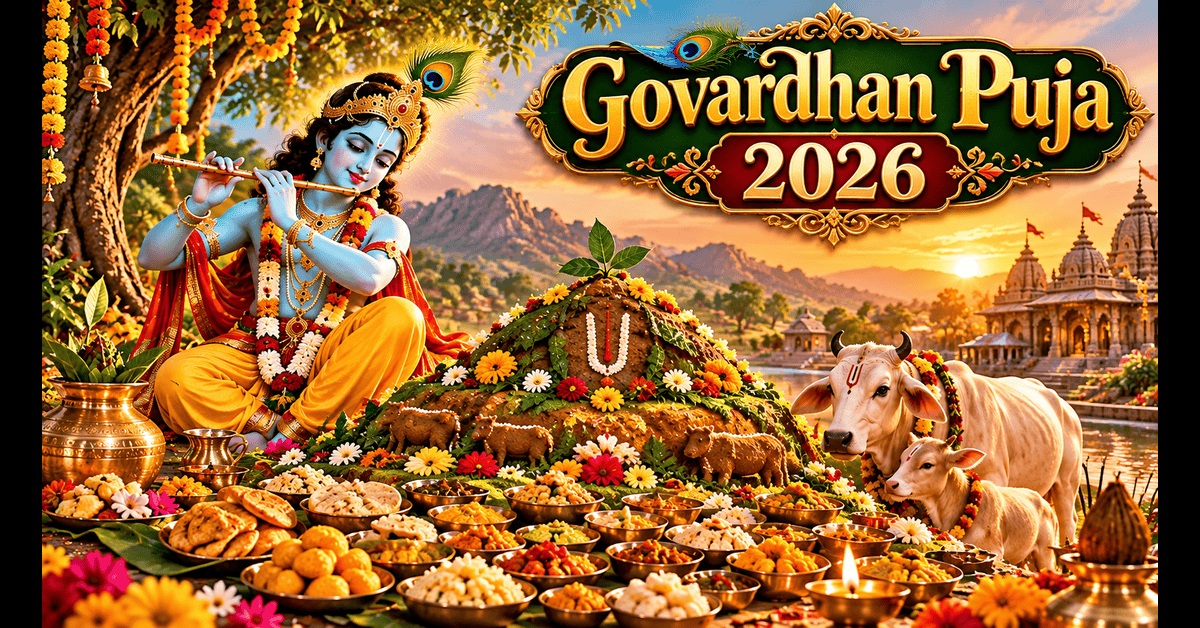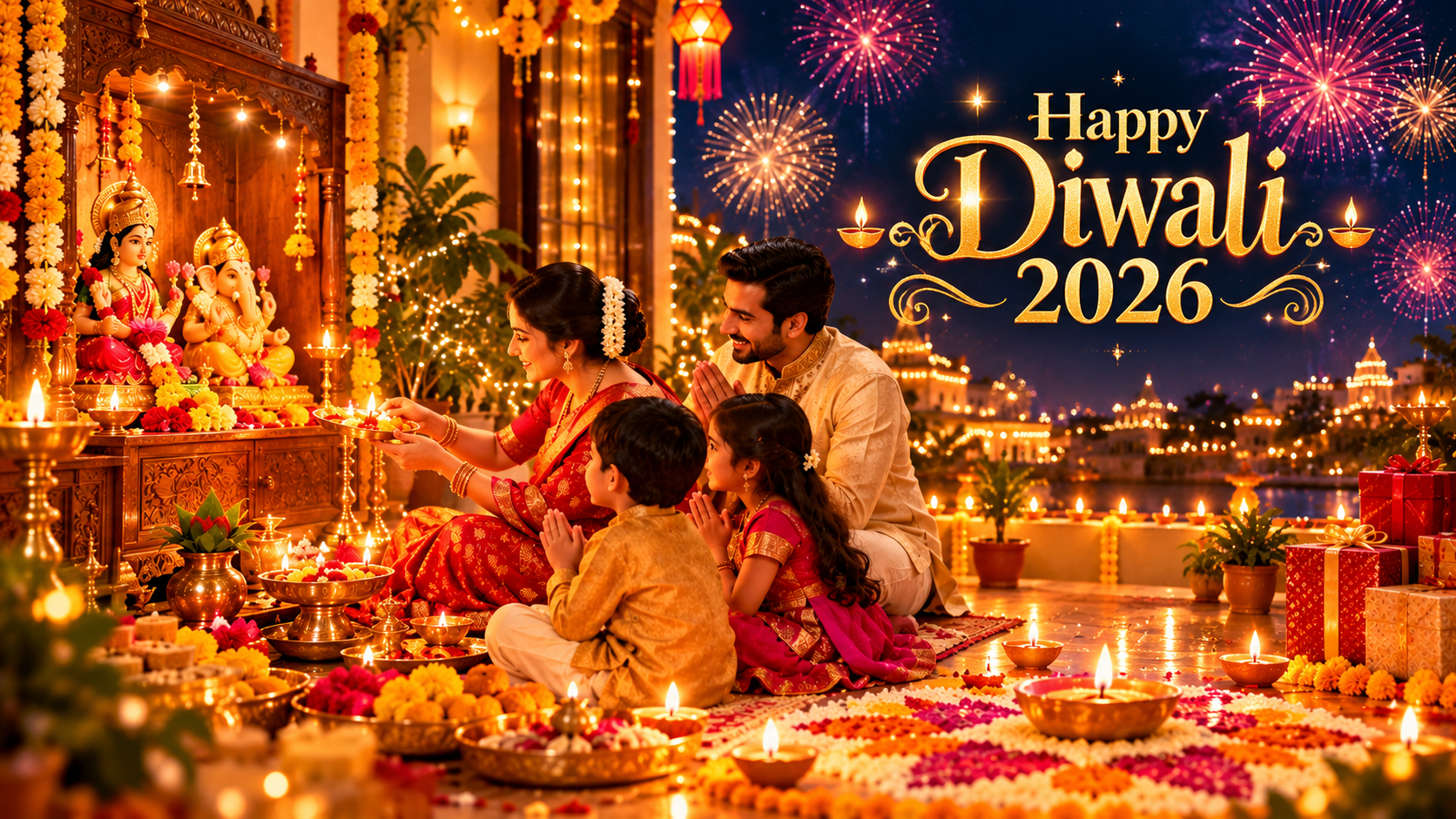
Diwali, popularly known as Deepavali, is among the most significant Hindu festivals celebrated in India and by Indian communities across the world. The festival is associated with the triumph of light over darkness, righteousness over negativity, and wisdom over ignorance.
Before Dhanteras 2026 begins, many devotees observe : Dhanteras 2026
Although Diwali is commonly referred to as a single-day festival, the traditional celebrations continue over several days, beginning with Dhanteras and concluding with Bhai Dooj. Each day carries its own religious and cultural importance.
During this festive period, people clean and decorate their homes, create colourful Rangoli designs, light diyas, prepare sweets, and perform prayers. Lakshmi-Ganesha Puja is especially important on Diwali as devotees seek blessings for prosperity, peace, happiness, and well-being.
Let’s Explore the Complete Essence of Dhanteras 2026:-
Diwali 2026: Date and Religious Significance
The term Deepavali literally refers to a “row of lamps.” Lighting earthen diyas is therefore one of the central traditions of the festival.
Diwali is particularly associated with the worship of Goddess Lakshmi, who is traditionally revered as the deity of wealth, abundance, and prosperity. Many households also worship Lord Ganesha, seeking wisdom and the removal of obstacles.
The festival is also an opportunity to bring greater positivity, knowledge, harmony, and spiritual awareness into everyday life.
When Is Diwali 2026?
In 2026, the main Diwali celebration and Lakshmi Puja will take place on: Sunday, November 8, 2026
According to the given Panchang timings, Amavasya Tithi will begin at approximately 11:27 AM on November 8 and continue until around 12:31 PM on November 9.
Since Lakshmi Puja is traditionally performed during the evening portion of Amavasya, November 8 will be observed as the principal Diwali date.
Important Dates Around Diwali 2026
- Dhanteras: November 6, 2026
- Naraka Chaturdashi / Kali Chaudas: November 7, 2026
- Diwali and Lakshmi Puja: November 8, 2026
- Govardhan Puja: November 10, 2026
- Bhai Dooj: November 11, 2026
Festival dates and rituals may vary slightly between regions, so devotees should follow the Panchang traditionally used in their area.
Why Pradosh Kaal and Sthir Lagna Matter
For Diwali Lakshmi Puja, Pradosh Kaal, the period around sunset, is traditionally considered significant. Many households prefer to perform the main worship during this evening period.
Some traditions also consider Sthir Lagna, or a fixed ascendant, particularly suitable for Lakshmi Puja. In Vedic astrology, Taurus, Leo, Scorpio, and Aquarius are regarded as fixed signs.
However, the exact timing of a fixed ascendant changes from one location to another. Sunrise, sunset, and the rising sign depend on geographical location. Therefore, a local Panchang should be consulted before finalizing the Puja time.
Diwali 2026 Lakshmi Puja Muhurat
For Varanasi, the approximate timings for Diwali 2026 are:
- Lakshmi Puja Muhurat: 5:37 PM to 7:34 PM
- Pradosh Kaal: 5:13 PM to 7:49 PM
- Vrishabha Kaal: 5:37 PM to 7:34 PM
The Lakshmi Puja period therefore falls within both Pradosh Kaal and Vrishabha Lagna for Varanasi.
For Noida, the approximate Lakshmi Puja Muhurat is: 5:54 PM to 7:49 PM
These timings are location-specific. They should not be applied universally across India, as the Puja Muhurat can change depending on the city and local Panchang calculations.
Diwali 2026: Mahanishith Kaal
Mahanishith Kaal is a special nighttime period associated particularly with certain spiritual and Tantric traditions. It is also considered significant for specific forms of Goddess Kali worship.
For Varanasi, the approximate Mahanishith Kaal in 2026 is: 11:16 PM to 12:08 AM
This period is generally relevant to specialized spiritual practices. For regular household Lakshmi-Ganesha worship, the evening Pradosh period is more commonly followed.
Diwali 2026: Preparations and Rituals
Diwali preparations usually begin several days before the festival. Homes are cleaned thoroughly and decorated with diyas, flowers, Rangoli, lights, and other festive decorations.
On Diwali, devotees may take an early bath, wear clean clothes, and prepare the house and Puja area for the evening ceremony.
Some families also observe a daytime fast and eat after completing the evening Puja. Fasting is a personal practice and should be followed according to individual health considerations and family traditions.
Before Lakshmi Puja
- Clean and organize the house.
- Decorate the entrance with Rangoli or traditional designs.
- Place diyas around the home.
- Prepare and clean the Puja space.
- Keep all Puja materials ready.
- Arrange the idols or images of the deities for worship.
Lighting diyas throughout the house is not only a festive tradition but also symbolizes the removal of darkness and the welcoming of positivity.
Remembering Ancestors on Diwali 2026
Because Diwali occurs on Amavasya, some Hindu families also use this occasion to remember and honour their ancestors.
As part of their family tradition, devotees may light a diya in remembrance of departed ancestors before beginning the main Lakshmi-Ganesha Puja. Some families may also make traditional food offerings or perform other customary rituals.
These practices are expressions of gratitude and remembrance and can differ according to regional and family traditions.
Diwali 2026 Lakshmi Puja Vidhi
Start by cleaning the Puja area properly. If it is part of your customary practice, sprinkle Gangajal around the worship space.
Place a clean Chowki or wooden platform in the designated area and cover it with a fresh red or yellow cloth.
The following deities may be placed for worship according to family tradition:
- Goddess Lakshmi
- Lord Ganesha
- Lord Vishnu
- Goddess Saraswati
- Lord Kuber
It is not necessary for every household to include all these deities; the arrangement may be based on individual customs.
Place a Kalash filled with clean water near the Puja platform and decorate it according to your traditional Puja Vidhi.
Keep all the necessary Puja offerings ready, including Roli and Kumkum, Akshat, flowers and garlands, fruits, sweets, incense, a Ghee lamp, Gangajal, Moli, betel nut, betel leaves, turmeric, clothes, and other traditional items as per your family customs.
Begin the ceremony by worshipping Lord Ganesha, followed by Goddess Lakshmi. Offer flowers, fruits, sweets, and other appropriate items while reciting the respective prayers and mantras.
Once the main Puja is completed, perform Ganesh Aarti and Lakshmi Aarti. Finally, distribute the Prasad among family members.
Lakshmi Mantra for Diwali
A commonly recited mantra dedicated to Goddess Lakshmi is:
Om Mahalakshmyai Cha Vidmahe
Vishnupatnyai Cha Dhimahi
Tanno Lakshmih Prachodayat.
Devotees may also recite Sri Sukta, Lakshmi Chalisa, or Lakshmi Stotram according to their family tradition and personal practice.
Important Things to Keep in Mind During Diwali Puja
The Puja should ideally be performed with a calm and devotional mindset rather than being rushed simply to finish within a particular time.
Prepare the Puja materials beforehand so that the ceremony can be performed smoothly. Keep the worship area clean and maintain a peaceful atmosphere during the rituals.
After completing the Puja, Prasad can be shared with family members. Those who wish to extend the spirit of Diwali may also help people in need through food, clothing, donations, or other forms of support according to their capacity.
Conclusion
The festival is a time to illuminate our homes and also encourage positivity, gratitude, peace, and spiritual awareness in our lives. Families can celebrate by lighting diyas, decorating their homes, preparing traditional food, and performing Lakshmi-Ganesha Puja according to their customs.
To know more about various astrology-related services, contact Vedic Astro Kendra.
Mobile No.: +91-9810817817, 9319675902
WhatsApp: +91-9810817817
We deliver top-tier products and exceptional customer service to our valued clients. Our offerings includes Online Puja, Yantras and Kavach, Kundali Vishleshan (the creation and interpretation of birth charts), Vastu Shastra Consultations, as well as personalized recommendations for Gemstones and Rudraksha.