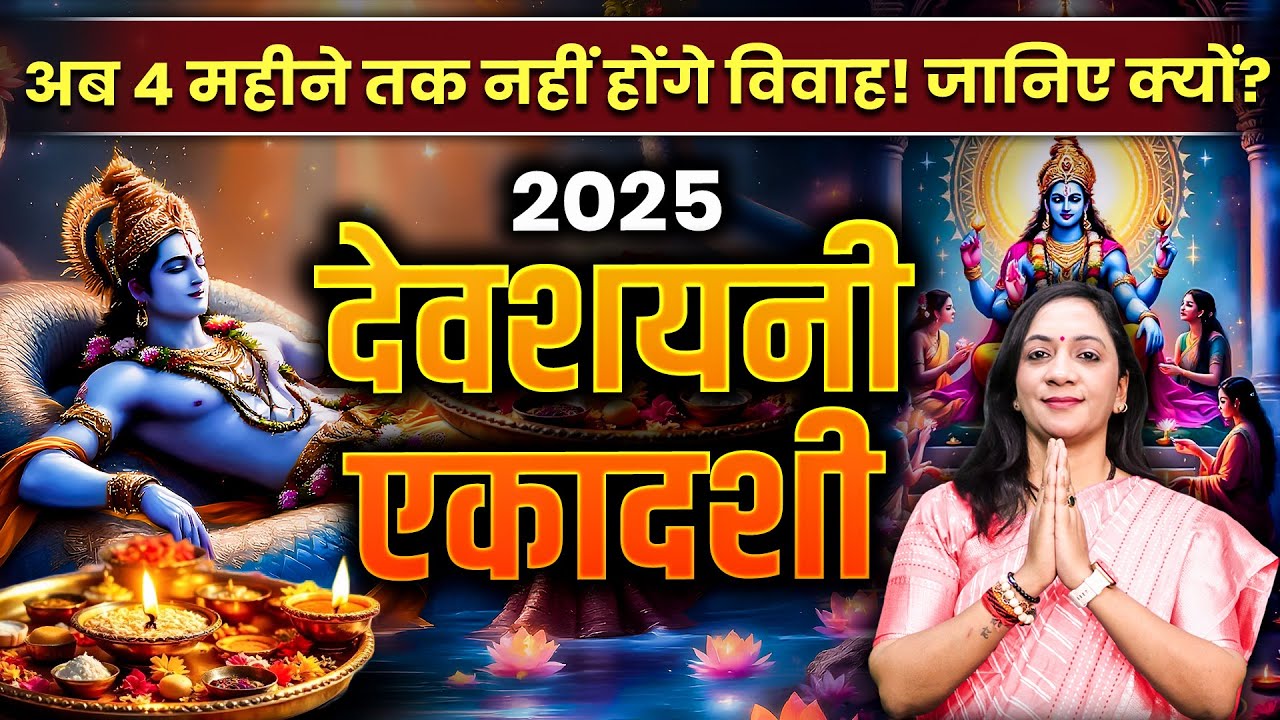
Devshayani Ekadashi is one of the most sacred fasting days in Sanatan Dharma. It marks not just a spiritual observance but a time for inner purification, discipline, and devotion. Dedicated to Lord Vishnu, this Ekadashi also signifies the beginning of Chaturmas, the four holy months of penance, prayer, and spiritual growth.
Let’s dive deep into the importance, rituals, vrat katha, and traditions associated with Devshayani Ekadashi 2025.
Know in detail about Devshayani Ekadashi 2025
Devshayani Ekadashi 2025: Date & Timings
According to the Hindu calendar, Devshayani Ekadashi falls on the Ekadashi tithi (11th lunar day) of Shukla Paksha in the month of Ashadha.
In 2025, Devshayani Ekadashi will be observed on Sunday, 6 July 2025.
- Ekadashi Tithi Begins: 5 July 2025 at 6:58 PM
- Ekadashi Tithi Ends: 6 July 2025 at 9:14 PM
- Vrat Parana (breaking of the fast): 7 July 2025, between 6:07 AM to 8:48 AM
This Ekadashi is also known by other names like Hari Shayani Ekadashi, Padma Ekadashi, and Shayani Ekadashi.
Religious and Spiritual Significance
As per Vedic scriptures, Devshayani Ekadashi is the day when Lord Vishnu enters Yogic Sleep (Yoga Nidra) in the Ksheer Sagar (Ocean of Milk). He remains in this state for four months and awakens on Devuthani Ekadashi in the month of Kartik. This marks the beginning of Chaturmas—a period of deep spiritual significance.
Why is Devshayani Ekadashi Important?
- It marks the start of a spiritually significant time ideal for self-discipline, penance, and devotion.
- No auspicious ceremonies such as marriages, housewarming, mundan, or naming rituals are conducted during the period of Chaturmas.
- The time is considered perfect for inner reflection, bhakti (devotion), and moral living.
Both the Bhavishyottar Purana and Brahmavaivarta Purana speak highly of this Ekadashi, stating that observing this fast with sincerity leads to abundance, peace, and eventual liberation (moksha).
Devshayani Ekadashi Vrat Katha (Legend from Bhavishyottar Purana)
The significance of Devshayani Ekadashi is beautifully narrated through a legend in the Bhavishyottar Purana:
In Satyuga, there was a righteous and compassionate king named Mandhata, a descendant of the Suryavanshi (Solar Dynasty). His kingdom was peaceful and prosperous until a severe drought struck, causing great suffering among his people. It didn’t rain for three consecutive years Wake up before sunrise and take a sacred bath; if possible, bathe in a holy river such as the Ganga. Disturbed by the plight of his subjects, King Mandhata ventured into the forests seeking spiritual guidance. He reached the hermitage of Sage Angira, the son of Lord Brahma.
Sage Angira revealed that the drought was a result of the violation of dharma—wherein people from lower castes were engaging in rituals traditionally performed by Brahmins. He advised that those individuals be punished.
However, King Mandhata, being just and kind-hearted, refused to discriminate. He believed that every living being is a reflection of Lord Vishnu and asked the sage for another solution.
Pleased by the king’s sense of equality and righteousness, Sage Angira recommended that the king and his people observe Devshayani Ekadashi with devotion.
Following the advice, the king and his citizens observed the fast and worshipped Lord Vishnu. As a result, heavy rainfall blessed the land, ending the drought and restoring prosperity.
Devshayani Ekadashi Puja Vidhi & Vrat Rules
The vrat (fast) and puja rituals for Devshayani Ekadashi are considered highly meritorious. Below is a step-by-step guide:
-
Morning Preparations
- Wake up early, before the sun rises, and take a ritual bath — bathing in the Ganga or any other sacred river is especially auspicious.
- Wear clean, traditional clothes and take a vow (sankalp) to observe the fast with sincerity.
-
Puja Rituals
- Install idols or images of Lord Vishnu and Goddess Lakshmi on a clean altar.
- Offer chandan (sandalwood paste), flowers, tulsi leaves, incense, and diya (lamp).
- Chant the sacred mantra: “Om Namo Bhagavate Vasudevaya”.
- Recite the Vishnu Sahasranama (1000 names of Lord Vishnu).
- Offer satvik bhog such as fruits, sweets (especially kheer), and milk-based items.
-
Vrat Rules
- Avoid tamasic foods like onion, garlic, eggplant, mushrooms, and hing.
- Refrain from negative behaviors like anger, lying, gossiping, or criticism.
- Stay away from outside or stale food; alcohol and non-vegetarian items are strictly prohibited.
- Try to stay awake during the night, engaged in bhajans and kirtans.
-
Vrat Parana (Breaking the Fast)
- The fast is broken on the Dwadashi tithi (12th lunar day) after sunrise.
Parana should be performed within the designated muhurat using simple and sattvik food.
Significance of Donating on Devshayani Ekadashi
Giving daan (charity) on this day is considered extremely auspicious. You can donate:
- Food grains
- Clothes
- Fruits and vegetables
- Religious books
- Money or daily necessities to the needy
Feeding the hungry and helping the helpless person is believed to erase sins and bring prosperity. Those facing financial hardship or misfortune are especially encouraged to observe this vrat with charity for favorable results.
Chaturmas Begins with Devshayani Ekadashi
With the onset of Devshayani Ekadashi, Chaturmas (Four Holy Months) begins. Devotees observe this period with deep spiritual austerity and self-restraint
What to Avoid During Chaturmas:
- Avoid planning significant rituals or events such as weddings and housewarmings.
- Many devotees give up certain foods like salt, oil, curd, or sweets as a form of tapasya (penance).
- Devotees also avoid cutting their hair and nails on certain days during this time.
What to Practice During Chaturmas:
- Regular meditation, japa, reading scriptures, and satsang.
- Performing daily puja, keeping vows, and following brahmacharya (celibacy) if possible.
- Devotees also take pledges to give up one bad habit or cultivate a good one during this time.
To Know More About Sawan 2025 in Hindi, Watch This Video:
Conclusion: A Time for Inner Transformation
Devshayani Ekadashi is not just a day of fasting—it is a gateway to spiritual awakening. It invites us to pause, reflect, and purify ourselves through devotion, discipline, and charity.
Observing this vrat with sincerity leads to inner peace, spiritual growth, and material prosperity. It reminds us of the power of bhakti (devotion) and how, even in the darkest times, surrender to the Divine can restore balance and grace.
To know more about various astrology-related services, contact Vedic Astro Kendra.
Mobile No.: +91-9810817817, 9319675902
WhatsApp: +91-9810817817
We deliver top-tier products and exceptional customer service to our valued clients. Our offerings includes Online Puja, Yantras and Kavach, Kundali Vishleshan (the creation and interpretation of birth charts), Vastu Shastra Consultations, as well as personalized recommendations for Gemstones and Rudraksha.